31 Oct 2026
Mapping the Growth Patterns of Mobile-Based Gambling Activities in Regulated German Markets
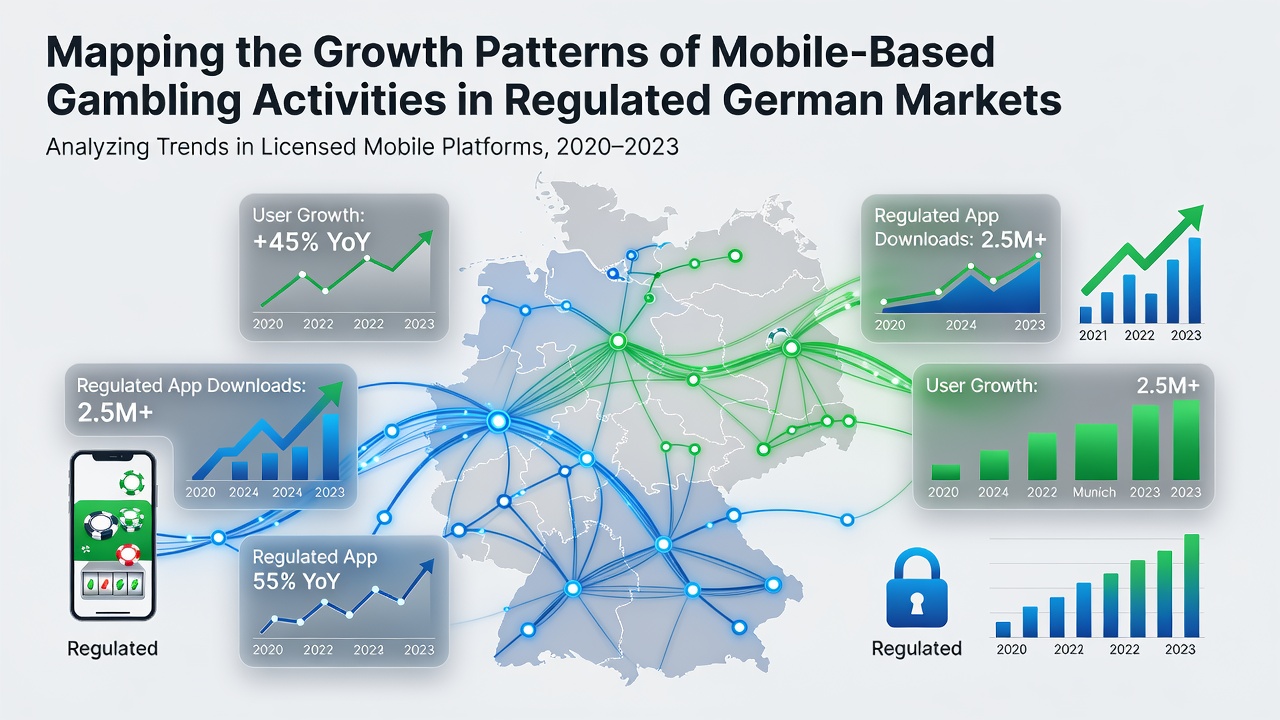
Regulated markets in Germany have seen steady expansion in mobile-based gambling since the Interstate Treaty on Gambling took effect in 2021, and researchers track these shifts through license data plus usage statistics released by state authorities. Mobile platforms now account for the majority of player interactions in licensed operations, while desktop access continues to decline in relative share according to figures compiled by the Gemeinsame Glücksspielbehörde der Länder. Those who study the sector note that smartphone penetration combined with improved network coverage has driven consistent year-over-year increases in session counts and deposit volumes across multiple game categories.
Regulatory Context Shaping Mobile Expansion
German licensing rules require operators to verify player locations through geofencing technology, which restricts activity to within national borders and creates clear datasets for analysts to examine. Compliance obligations also mandate responsible gambling tools that function seamlessly on mobile interfaces, and these features generate additional usage logs that researchers examine when mapping activity spikes. Data from the German Federal Centre for Health Education shows participation rates among adults holding steady in regulated channels while unregulated offshore sites lose ground in tracked metrics. Observers note that the staggered rollout of sports betting licenses followed by casino products produced distinct growth phases, with mobile sports betting leading early adoption before casino-style games caught up in later quarters.
Device Usage and Session Behavior Patterns
Studies compiled by academic teams at institutions such as the University of Hamburg reveal that average session lengths on mobile devices run shorter than desktop equivalents yet occur more frequently throughout the day. Peak activity clusters around evening hours and major sporting events, with push notifications and in-app reminders contributing to return visits. Payment method preferences lean toward digital wallets and instant bank transfers on phones, and these trends appear in transaction records submitted to regulators. The official licensing portal publishes quarterly breakdowns that confirm mobile channels dominate new account registrations in every federal state where full licensing operates.
Geographic and Demographic Distribution of Activity
Urban centers in North Rhine-Westphalia and Bavaria report higher per-capita mobile engagement compared with rural districts, though the gap narrows as 5G coverage extends into smaller towns. Age cohorts between 25 and 44 show the strongest mobile preference, while older groups maintain more balanced device usage according to surveys conducted by regional health ministries. Gender splits remain relatively stable across platforms, yet mobile interfaces record slightly higher participation from female users in skill-based games. Analysts cross-reference these patterns with census data to produce heat maps that highlight emerging hotspots near university towns and commuter corridors.
Revenue and Volume Metrics Through Mid-Decade
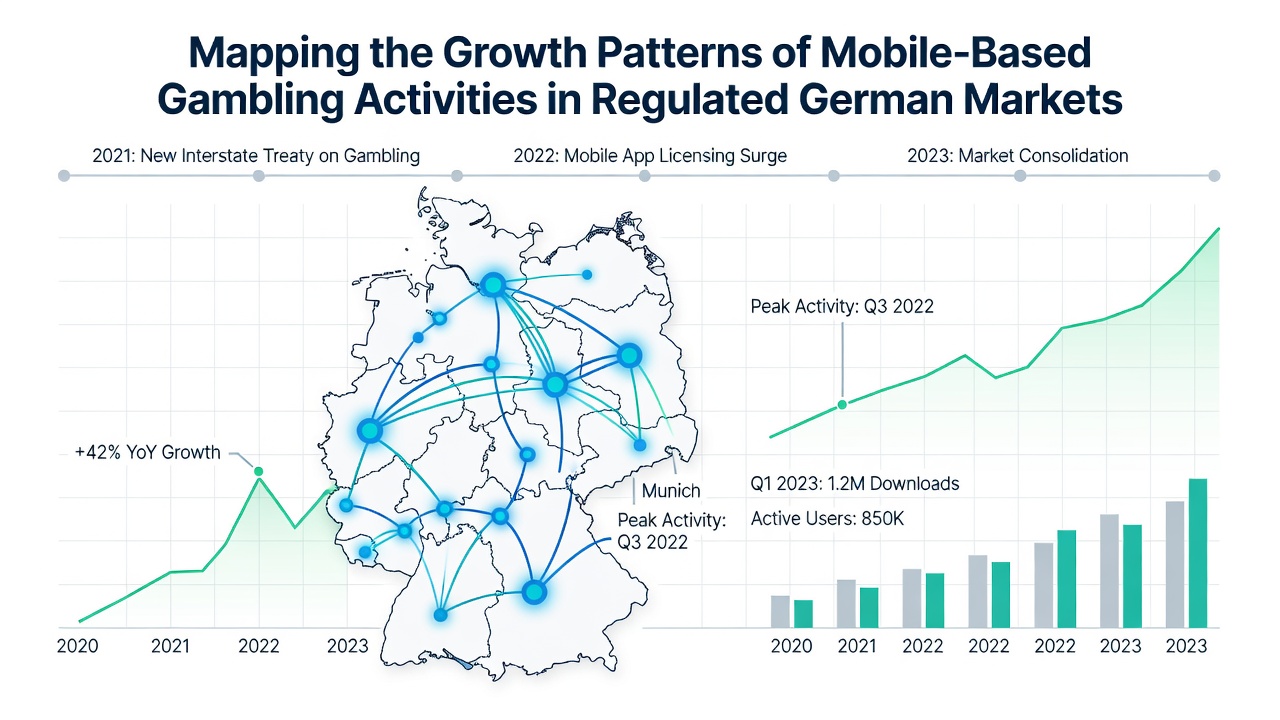
Revenue reports filed by licensed providers indicate that mobile-generated gross gaming revenue surpassed desktop totals by the end of 2024, and the margin continues to widen in 2025 filings. Sports betting mobile volumes grew particularly fast during international tournaments, whereas slot and table game activity on phones rose more gradually but with greater consistency. Researchers examining deposit frequency data find that smaller, repeated transactions characterize mobile behavior, which contrasts with larger occasional transfers on desktop clients. These patterns feed into forecasting models used by both regulators and operators when planning server capacity and compliance staffing.
October 2026 Milestones and Data Releases
Scheduled updates to the national gambling registry in October 2026 will provide the first complete dataset covering two full years of multi-state casino licensing, and analysts expect these figures to clarify whether mobile growth rates have stabilized or continue accelerating. Concurrent evaluations by the Federal Ministry of Health will assess the effectiveness of mobile-specific harm reduction tools introduced in prior years. Preliminary indicators shared at industry briefings suggest that real-time spending limit notifications delivered via smartphone apps have produced measurable drops in high-velocity play sessions, though long-term outcome studies remain underway. External comparisons drawn from Canadian provincial data and Australian regulatory summaries help contextualize German trends against markets with similar licensing frameworks.
Emerging Technologies Influencing Future Trajectories
Integration of biometric authentication on newer smartphones has reduced login friction for verified players, and operators report corresponding lifts in daily active users after implementing these options. App store policy changes that permit direct gambling applications in Germany have further streamlined access compared with browser-only experiences that dominated earlier periods. Machine learning models deployed by compliance teams now flag unusual mobile betting sequences faster than previous rule-based systems, which in turn supports more precise regulatory oversight. Those who monitor infrastructure investments note that continued 5G expansion into eastern states could unlock additional growth pockets by late 2027 if current adoption curves hold.
Conclusion
Comprehensive mapping of mobile gambling activity in Germany's regulated environment relies on layered data sources that include licensing records, transaction logs, and independent surveys. Patterns observed so far point to sustained mobile dominance accompanied by stable regulatory controls and gradual geographic diffusion. Upcoming releases scheduled for October 2026 will supply critical benchmarks for evaluating whether these trajectories persist or shift under evolving market conditions and technological upgrades.